
 Professor of Cognitive Neurology
 Clinician scientist and neurologist specialising in Parkinson’s disease (PD) and PD-associated dementia.
 https://cambridgebrc.nihr.ac.uk/wp-content/uploads/2017/03/WBIC-scanner.png
609
917
cbrcprod
https://cambridgebrc.nihr.ac.uk/wp-content/uploads/2026/06/NIHR-BRC-Cambridge-Navy-Logo-20-years-scaled.png
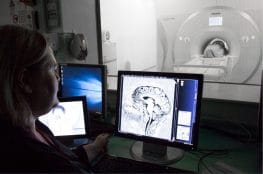
cbrcprod2024-10-09 09:06:212025-01-10 18:06:33Ultra-powered MRI scans show damage to brain’s ‘control centre’ is behind long-lasting Covid-19 symptoms
https://cambridgebrc.nihr.ac.uk/wp-content/uploads/2017/03/WBIC-scanner.png
609
917
cbrcprod
https://cambridgebrc.nihr.ac.uk/wp-content/uploads/2026/06/NIHR-BRC-Cambridge-Navy-Logo-20-years-scaled.png
cbrcprod2024-10-09 09:06:212025-01-10 18:06:33Ultra-powered MRI scans show damage to brain’s ‘control centre’ is behind long-lasting Covid-19 symptoms


The NIHR BRC: Cambridge is part of the NIHR and hosted by Cambridge University Hospitals NHS Foundation Trust in partnership with the University of Cambridge. We are at the heart of the Cambridge Biomedical Campus, Europe’s largest health research area.
Contact Us
NIHR Biomedical Research Centre: Cambridge
Box 277
Hills Road
Cambridge
CB2 0QQ
Tel: 01223 348490

Congrats to @NIHR20 Research Leaders Prizewinners @CambridgeCRF Operations Director Caroline Saunders & @Cambridge_Uni & @CUH_NHS Neurosurgeon Benjamin Davies, who've both won awards for their leadership skills & commitment to patient-centred research: https://bit.ly/4y0HVFx
3
Are you looking for guidance on setting up a clinical trial? Look no further!
The #CTToolkit is an interactive colour-coded routemap that provides guidance on legal and best practice requirements. Bursting with advice, it's a must-see for any aspiring researcher ➡️

The Lung Immune Challenge Study, led by @Akhilesh_Jha (@HLRI_Cambridge), has reached a milestone with the final participant completing the first phase designed to investigate how immune systems respond to viral lung infections.
➡️ https://buff.ly/tXrD5v8
@The_MRC @CambridgeBRC
Learn about two upcoming career development awards that can support you in undertaking short placements in another part of NIHR or a local authority to enhance your research training experience and academic career development.
📅 Join our webinar from 12-1pm on 3 September to
In vivo coupling of dendritic complexity with presynaptic density in primary tauopathies
Apathy in pre-symptomatic genetic frontotemporal dementia predicts cognitive decline and is driven by structural brain changes
Brain functional network integrity sustains cognitive function despite atrophy in presymptomatic genetic frontotemporal dementia
Imaging tau burden in dementia with Lewy bodies using [18F]-AV1451 positron emission tomography
In vivo PET imaging of neuroinflammation in familial frontotemporal dementia