
Improving the speed and accuracy of brain tumour diagnosis for children and adults in the East of England
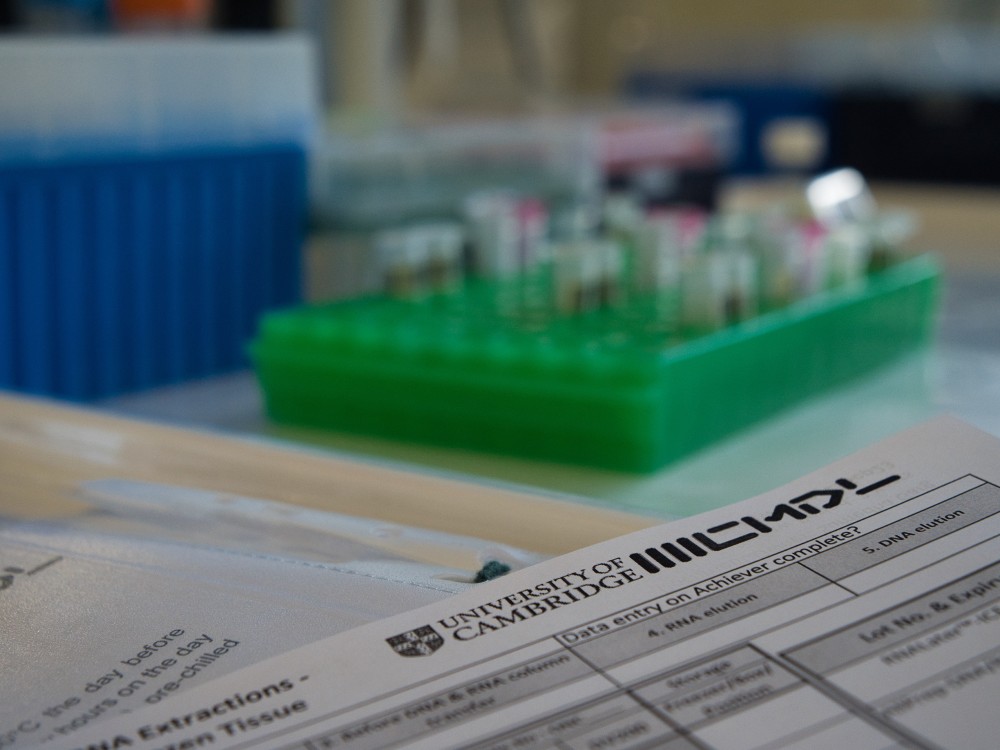
Image credit: CMDL Lab
29 June 2026
A Cambridge team, supported by NIHR BRC: Cambridge, have been awarded a competitive British Neuropathological Society (BNS) Grant to support an exciting project aiming to improve the speed and accuracy of brain tumour diagnosis for children and adults in the East of England.
The project is a collaboration between the Departments of Neuropathology (Dr Lina Carmona, Dr Kieren Allinson, and Dr Mayen Briggs), Neurosurgery (Mr Thomas Santarius), and Paediatric Haematology and Oncology (Professor Matthew Murray) at Cambridge University Hospitals NHS Foundation Trust (CUHNFT) and the CRUK Cambridge Centre Cancer Molecular Diagnostics Laboratory (Dr Shubha Anand).
Dr Lina Carmona, a trainee neuropathologist at CUHNFT, who led writing the application said:
“These funds from BNS will allow us to pilot a new approach to brain tumour diagnosis at CUHNFT. The project uses ‘Nanopore sequencing’, which is a portable, real-time DNA (genetic code) sequencing technology that can rapidly read a tumour’s genetic profile from a small tissue sample. It also provides ‘epigenetic’ information, which is how genes are regulated and controlled without alterations to the DNA genetic code itself, for example through methylation”
Mr Thomas Santarius, Co-Investigator and Consultant Neurosurgeon said:
“Currently, near the start of a brain tumour operation, we send a small sample of tumour to the neuropathologist for rapid review down the microscope. This information, from the ‘frozen section’, can help us decide how much of the tumour should be removed, to provide patients with the best possible outcome whilst at the same time trying to minimise the associated risks from the surgery. However, the Nanopore approach will give us even more detailed molecular information in a similar timeframe to help decision-making”
The new approach would allow detailed molecular data on the brain tumour to be obtained within a few hours, alongside the frozen section information, to give the most rapid and accurate diagnosis back to the neurosurgeon, to inform the ongoing operation.
Professor Matthew Murray, Principal Investigator for the study, added:
“Currently, detailed routine molecular data, including methylation and whole genome sequencing, typically takes 3-4 weeks to be returned to the clinical team. This Nanopore sequencing approach is highly promising and exciting as the technology could enable more precise resections and personalised treatment planning in real-time for both adult and paediatric patients with brain tumours. We are grateful to the BNS who have recognised the importance and translational potential of this research project”
The pilot work will be undertaken at the CRUK Cambridge Centre Cancer Molecular Diagnostics Laboratory, led by Dr Shubha Anand, which facilitates translational research studies and clinical trials. Importantly, the laboratory very recently achieved ISO 15189 clinical accreditation status for performing assays and tests, to ensure patient safety, data accuracy, and reliability, so is the ideal laboratory environment for undertaking this important pilot project.
Ultimately, the aim is to implement this Nanopore approach for all patients undergoing brain tumour surgery at CUHNFT, which the team hope will lead to improved patient outcomes.
Links
British Neuropathological Society: https://www.bns.org.uk/
Cancer Molecular Diagnostics Laboratory | CRUK CC:
https://crukcambridgecentre.org.uk/research/strategic/cancer-molecular-diagnostics-lab


